




























































Across public sector, how to use AI is largely a solved problem. Copilots for developers, assistants for caseworkers, and summarisation tools for policy teams are all in active use, and the patterns of that usage are well understood industry-wide. What isn’t understood, in most organisations, is value attribution for their specific use cases: whether the AI spend on a given deployment is actually paying for itself. Cost management has been treated as an afterthought, bolted on after the rollout rather than baked in from the start.
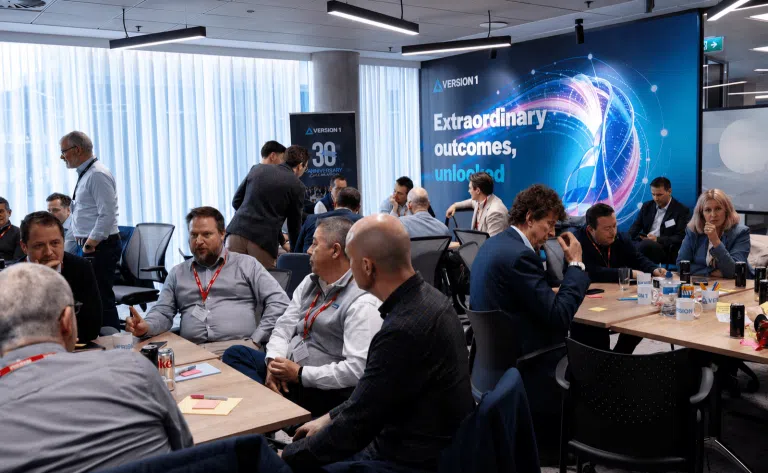
That gap was the subject of Tokenomics event, run alongside FinOps X in Amsterdam on 22 and 23 September. Tokenomics sits under the same Linux Foundation Technology Value umbrella as the FinOps Foundation, and it exists for a straightforward reason: the discipline that FinOps built over seven years for cloud cost management has a direct equivalent problem in AI token spend, and public sector organisations don’t need to solve it from scratch.
What seven years of FinOps has to offer token spend
FinOps didn’t start as a mature discipline either. It began as ad hoc cloud bill management and became a formal practice with defined roles, shared terminology, and cross-team accountability between engineering, finance, and operations. Tokenomics is applying the same trajectory to AI: standard ways to measure consumption, allocate cost to the teams and services generating it, and hold someone accountable for the trend line rather than reviewing it after the invoice lands.
For public sector organisations still treating token cost as a line item to check occasionally, that maturity path is available now rather than something that will need to be built independently over the next seven years.
The sovereignty trade-off nobody avoids
Public sector teams adopting AI coding and delivery tools, including GitHub Copilot, Anthropic’s Claude, and Google’s Gemini Code Assist, are running into assurance and data sovereignty questions that don’t have easy answers under a pure SaaS model.
Organisations with mature cloud estates are increasingly choosing to host their own models instead. That trade brings a real operational overhead: someone has to run and maintain the infrastructure. In exchange, it provides more control over spend and makes switching models, as new ones outperform old ones, considerably easier than it is under a vendor-managed SaaS contract. Neither route is free of cost or risk. The choice is which type of overhead an organisation is better placed to carry: vendor dependency, or infrastructure management.
CDEL and RDEL were not built for this
UK public spending is split into Resource Departmental Expenditure Limit (RDEL), covering day-to-day operational cost, and Capital Departmental Expenditure Limit (CDEL), covering capital investment. That split predates cloud computing, and cloud already strained it: a cloud subscription doesn’t map cleanly onto either category the way a one-off capital build once did, and public bodies have been working through that classification friction for years.
Research into UK public sector cloud spend has already found a large share of organisations hit unplanned cloud costs they hadn’t budgeted for, a direct symptom of a planning process not designed for consumption-based spend.
AI token consumption makes that friction worse, not better. It’s pure operational spend, consumed at a rate that depends on usage patterns an organisation often can’t forecast a year out, let alone across a multi-year spending review cycle. Agentic AI makes that forecasting problem harder still, because consumption scales with the complexity of the task an agent is given, not with a predictable per-user rate finance teams can plan against. An antiquated budget process that already struggled to classify cloud spend correctly is about to be asked to classify something that moves faster and is harder to predict than cloud ever was.
From assistive AI to agentic AI, the cost problem intensifies
Assistive AI has a cost profile that’s relatively easy to reason about: a user prompts, the model responds, and the token cost maps to a single, visible action. Agentic AI breaks that mapping. An agent working through a multi-step task can make dozens of model calls to complete one unit of outcome, and the relationship between token consumption and value delivered stops being obvious to the person who requested the work.
This is the shift public sector organisations need to plan for now. As adoption moves from copilots assisting individuals to agents completing tasks with less direct human oversight, the cost management challenge doesn’t scale linearly. It compounds.
What our team does internally: making token cost feel real
We have rolled out AI tools across our workforce, and the lesson from that rollout is behavioural as much as technical. Two things have made the most difference:

Training

Visibility of spend
That second point matters more than it sounds. A token count is an abstraction; a monthly cost in pounds is not. Users who can see what their usage actually costs make different, more deliberate choices about when to use AI and which tool to use for it.
What we do with public sector customers: carry the risk
We have invested in building our own agentic harness and are actively using it with public sector clients. That investment means our organisation, not the client, carries the risk of token consumption on outcome-based deliverables. Clients pay for the outcome; we manage what it costs to get there.
Managing that risk requires close tracking of what each part of the harness consumes, agent by agent, so consumption can be queried and individual agents improved rather than the system treated as a single black box.
Before work starts, our team and the client agree which models the harness uses and where each model processes and stores data. That agreement settles the sovereignty questions up front and fixes the cost boundaries before the first agent runs. Within those boundaries, we test different models, including open models, and selects each model on cost and fit, not a default provider.
The harness represents a substantial, ongoing investment. It keeps improving, taking on new capabilities and deliverables with each engagement, so we hold a leading position in agentic delivery for public sector. Cost management runs continuously for the same reason. Each improvement is re-measured against cost per outcome.
What public sector should be asking its AI suppliers now
The right question isn’t only whether a supplier’s tool can do the task. It’s who carries the cost risk if consumption runs higher than expected, what visibility the organisation gets into what’s actually driving that consumption, and how easily it can switch model or vendor if a better option appears.
Tokenomics’ arrival, borrowing seven years of FinOps discipline for AI, is a signal that these questions now have a maturing practice behind them. Public sector organisations don’t have to answer them alone, and they shouldn’t wait until agentic AI is the default before starting.
Talk to our public sector AI specialists about AI governance, token cost management, FinOps and agentic AI adoption.