













































































In a survey of 40 IT leaders, less than 10% could prove their AI spend delivers measurable value
We surveyed 40 leaders across the commercial sector on how they manage AI cost, token spend, ownership and value. The headline: fewer than 1 in 10 can currently prove that their AI spend delivers measurable business value, and the gaps behind that number run from budgeting through to basic visibility.
Who we asked
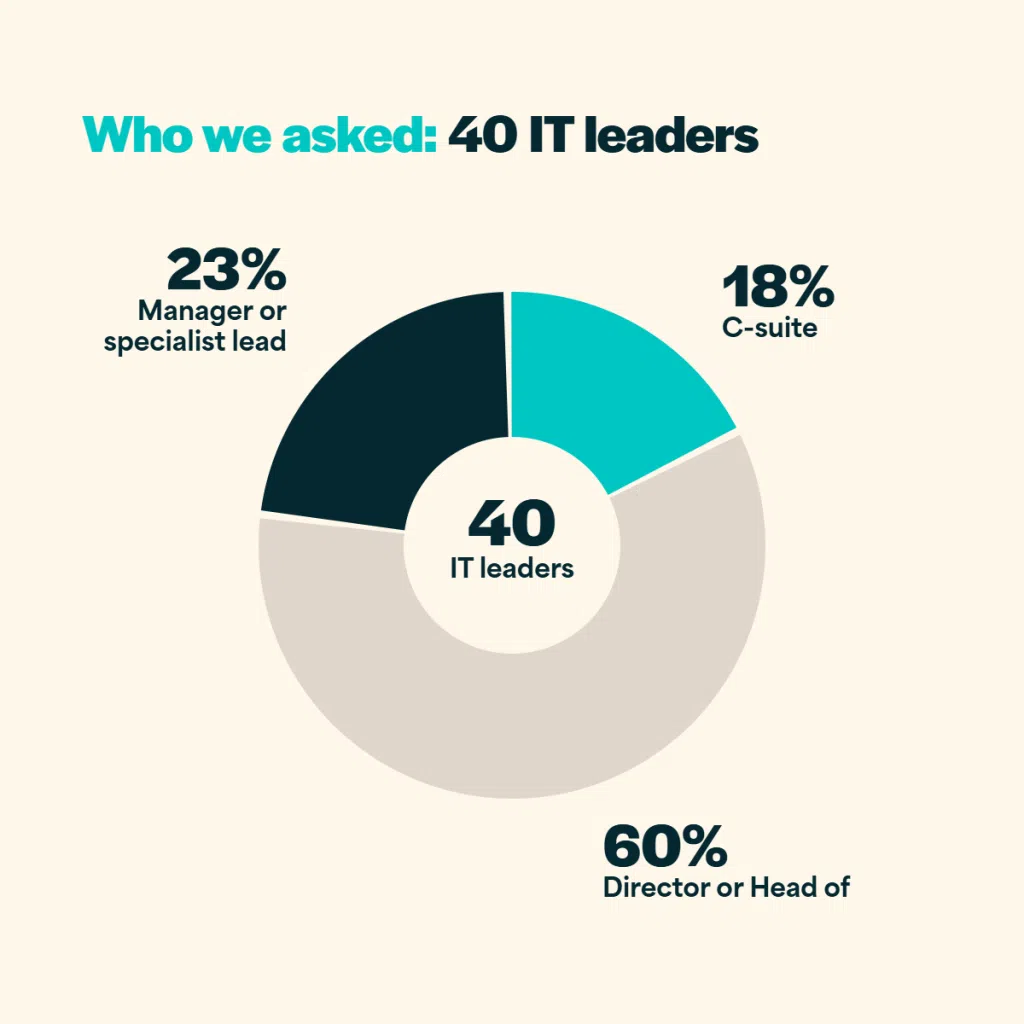
Respondents spanned 16 commercially focused industries, from aviation and pharmaceuticals to insurance, technology and financial services.
18% of respondents were C-suite, 60% were Director or Head of level, and the remaining 23% were specialist or manager-level leads closest to day-to-day AI delivery. These are the people who hold the budget and carry the risk.
Budget: a quarter are flying blind
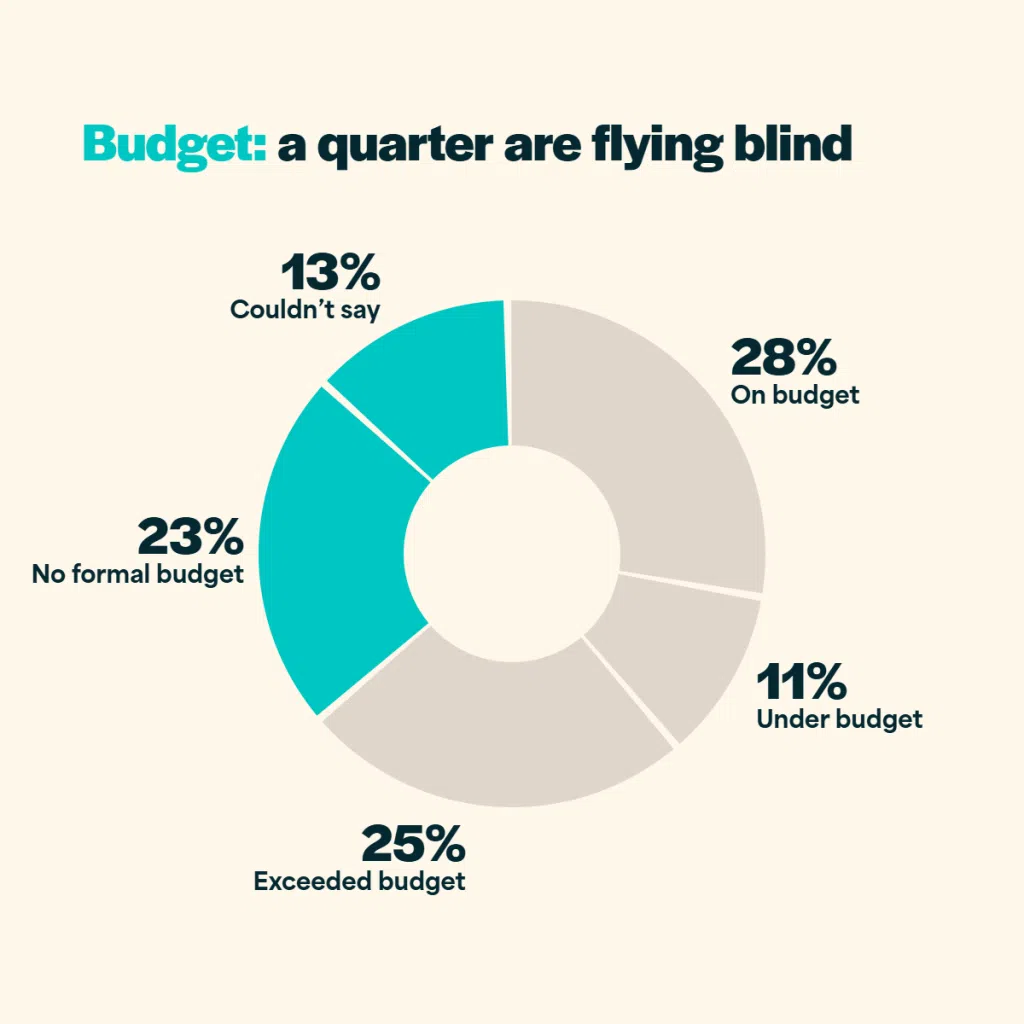
Only 28% said their AI spend came in roughly on budget over the past 12 months. 25% exceeded budget, in one case by more than 50%. 23% had no formal AI budget to compare against at all, and a further 13% couldn’t say either way.
So what? More than a third of organisations have no reliable budget baseline for AI spend. Closing that gap doesn’t need a precise forecast, it needs an agreed number before the next review cycle, even a rough one, so there’s something to measure the actual bill against when it lands.
Ownership: nearly a third have no single owner
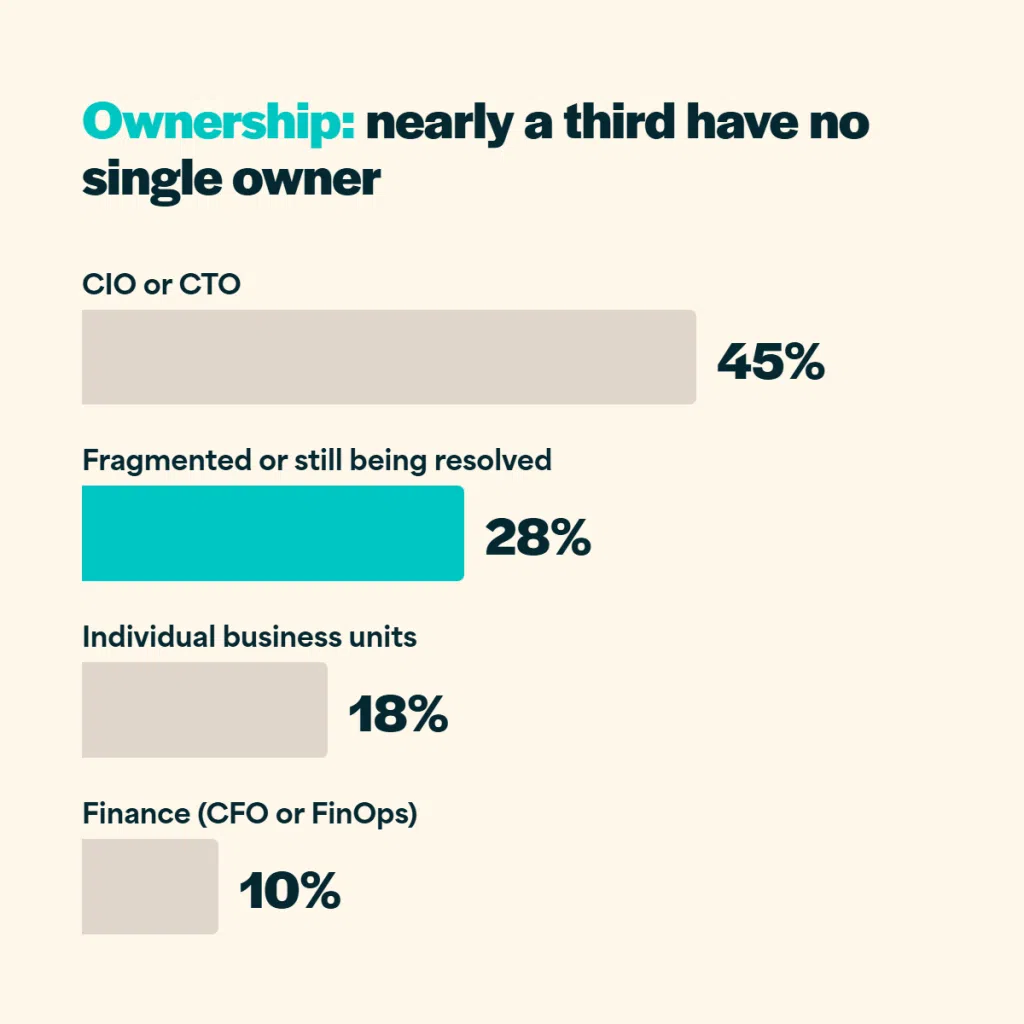
45% named the CIO or CTO as primarily accountable for AI spend. 28% said ownership is fragmented or still being resolved, and 18% pointed to individual business units rather than a central owner. Only 10% said finance, whether a CFO or a dedicated FinOps function, holds the budget.
So what? IT holding ownership works fine while AI spend sits inside an innovation budget. The fix isn’t necessarily handing the budget to finance, it’s agreeing now, before spend grows further, who picks up the conversation once it stops being an innovation cost and starts being a business-as-usual one.
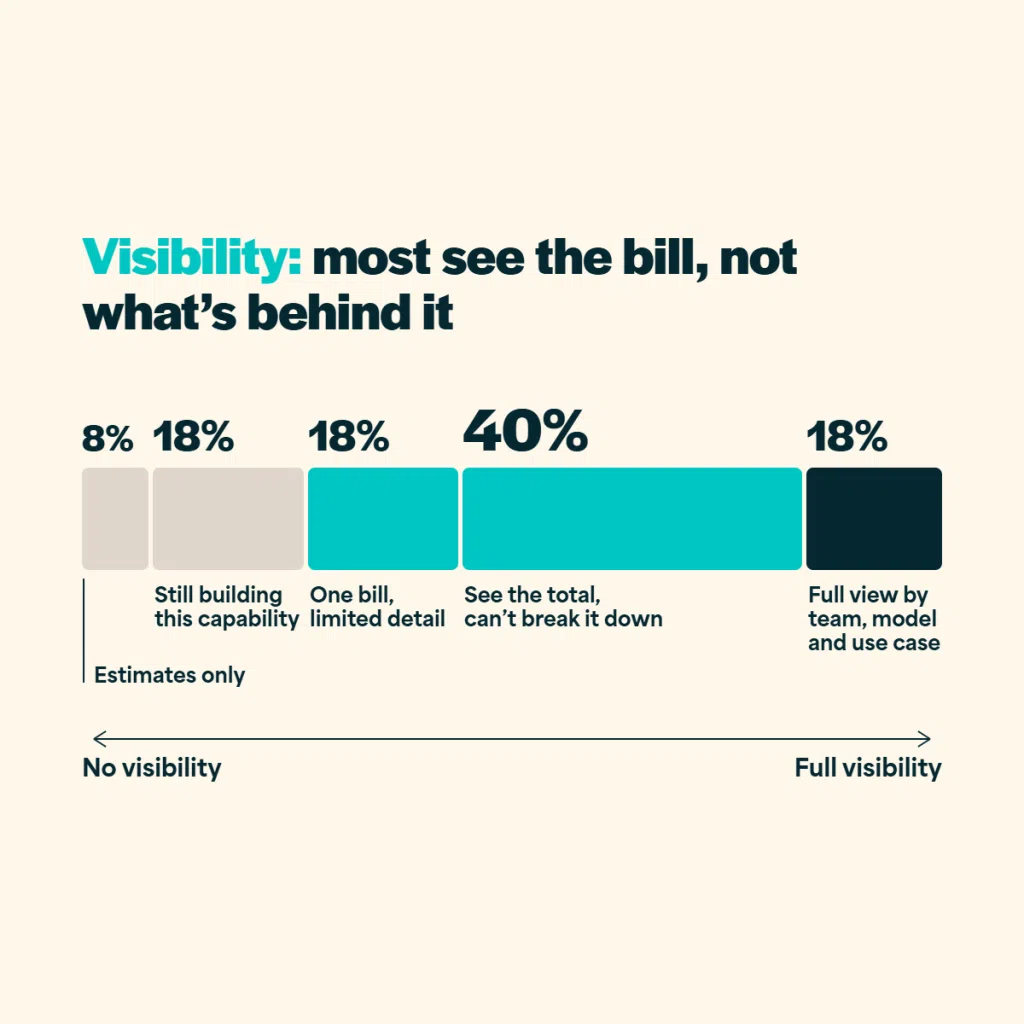
Visibility: most see the bill, not what's behind it
40% said they can see total AI spend but can’t break it down meaningfully. 18% get one consolidated bill with limited detail, and 18% are still building this capability. Only 18% have full visibility by team, model and use case, and 8% are working from estimates alone.
So what? Seeing the total isn’t the same as seeing the cause, and without that detail, every cost conversation defaults to an across-the-board cut rather than a targeted one. Closing this starts with tagging usage by team and use case before the next vendor renewal, not after, so there’s something to point a cost review at besides the whole bill.
Model choice: most default to the most expensive option
38% said their teams are somewhat deliberate about model choice, but the most capable (and most expensive) model is still the default. 30% aren’t deliberate at all, using one or two models for almost everything regardless of task. Only 18% actively match model to task based on cost and complexity, and 15% have no visibility into this at team level.
So what? Of the five gaps here, this is the easiest one to close. Nearly 7 in 10 organisations are still paying frontier-model prices for tasks a cheaper model would handle just as well. Fixing it doesn’t need new infrastructure, just a clear policy on which model suits which task, and someone checking that policy actually gets followed.
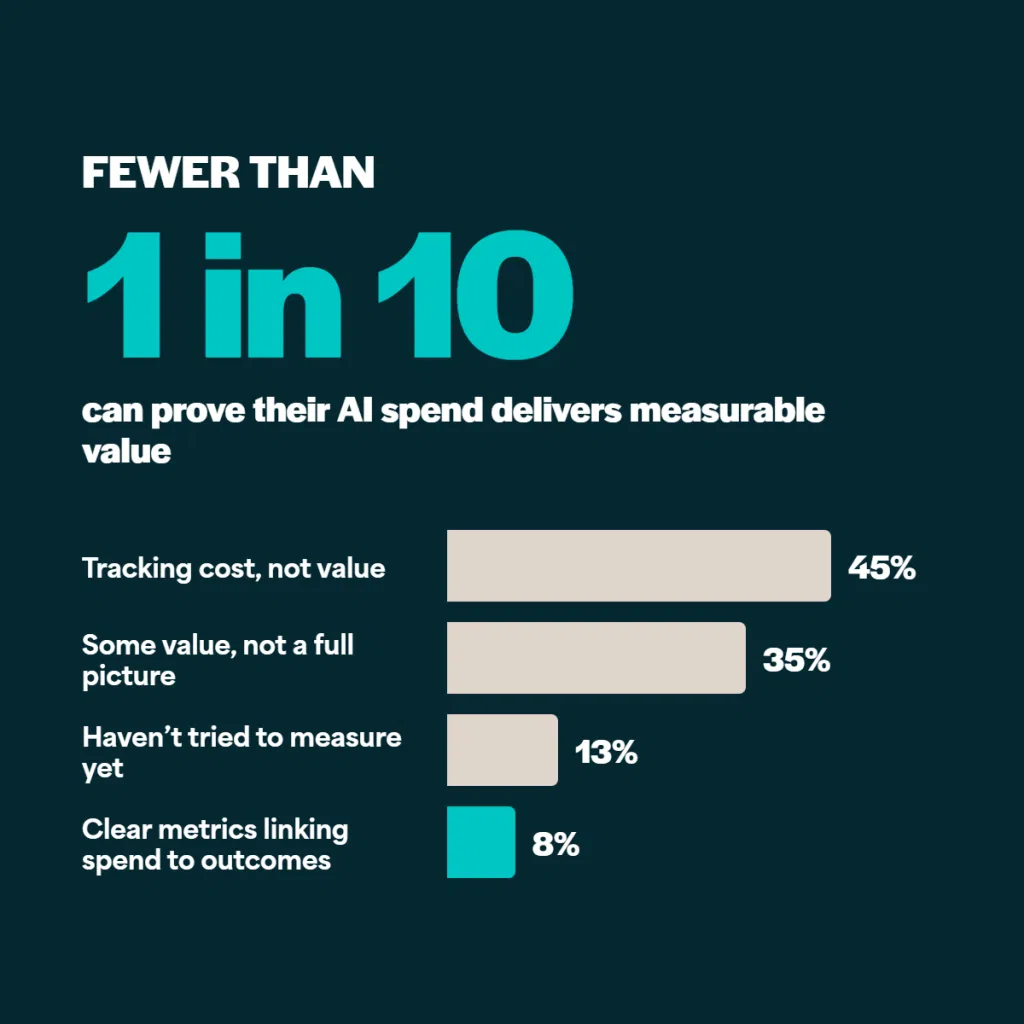
Value: fewer than 1 in 10 can prove it
45% are tracking cost but not value. 35% can show some value but not a full picture. 13% haven’t tried to measure this yet. Only 8%, three organisations out of 40, have clear metrics linking AI spend to business outcomes.
Budget and ownership gaps are fixable with process. This one needs a different starting point: pick two or three use cases that already have a measurable outcome attached, time per ticket, contracts reviewed, claims processed, and prove value there first, rather than trying to measure everything in one go.
The pattern underneath
None of these five gaps are unusual in isolation. Together, they describe organisations that have adopted AI faster than they’ve built the controls to manage it, which is the pattern we see most often across the private sector right now.
We map this pattern through a Tokenomics Diagnosis, a short engagement covering AI tools in use, token consumption and pricing tiers, payment models and commercial contracts, guardrails and controls, and data governance. It’s built to be a low-cost, low-risk way to find out where to focus before committing to anything larger.
How does your organisation compare?
Read the insights from our Tokenomics discussion event, covering the biggest challenges organisations face around AI cost, risk management and value measurement.