





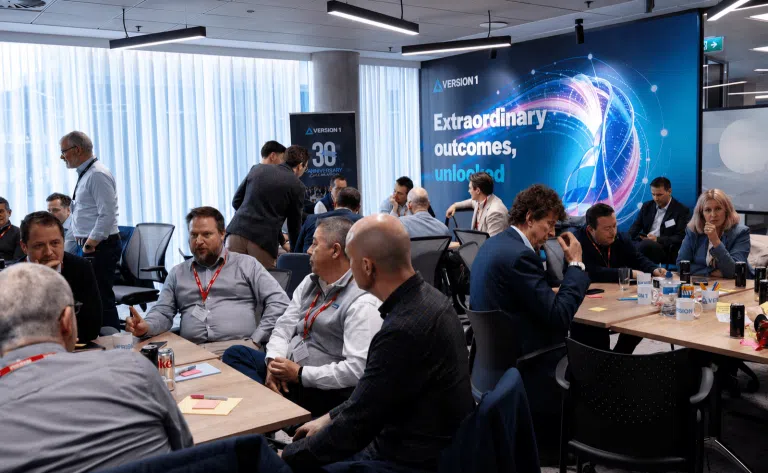































































We’re focused on outcomes rather than technology implementation alone.
Our Microsoft Fabric engagements typically centre on:
The enterprise conversation around AI often focuses on models, copilots and automation. In reality, the success of any AI initiative depends on something far less glamorous but considerably more important: data. Gartner predicts that through 2026, organisations will abandon 60% of AI projects that are not supported by AI-ready data.
Across both public and private sectors, organisations are wrestling with the same core challenges:
- Multiple disconnected, fragmented data sources
- Inconsistent governance and data ownership
- Limited trust in reporting and analytics
- Difficulty preparing for AI adoption
- Rising costs of maintaining fragmented platforms
- Failing AI projects through lack of properly prepared and controlled data
This is where Microsoft Fabric is changing the conversation and having a real impact.
We’re increasingly helping customers harness Microsoft Fabric not simply as another analytics tool, but as the foundation for modern, AI-ready enterprises.
Why Fabric Matters
Microsoft Fabric brings together data engineering, analytics, governance and business intelligence into a single platform.
With Fabric, organisations can establish a governed data foundation that supports both traditional reporting and analytics, and next-generation AI and Intelligence experiences by combining services and capabilities including OneLake, Data Pipelines, Lakehouse, Power BI, and Microsoft Purview. Rather than maintaining multiple disconnected technologies, teams gain a unified platform with contextual single truth.
Building a Fabric Foundation in Higher Education
One example is our work supporting a Fabric implementation for a large Irish University.
The engagement focused on establishing the core building blocks required for long-term analytics and AI success, including implementation of a raft of Fabric capabilities, delivering both an initial MVP and a scalable architecture to support future use cases
The objective was not simply to build reports. It was to create a fit-for-future platform that could evolve as organisational data maturity increased.
This approach reflects a common pattern we see across many organisations: start with a practical business use case while also establishing the architecture and governance needed for future growth. This drives rapid value realisation, while simultaneously establishing strong, reliable foundations.
Establishing Repeatable Data Products with Microsoft Fabric
A second example comes from recent work with a large delivery business.
The organisation identified challenges that will sound familiar to a lot of readers:
- Data silos across the organisation
- Multiple reporting tools
- Governance complexity
- Lack of a trusted view of information
- Growing demand for AI-enabled services
Their ambition is to use Microsoft Fabric as the foundation for a broader, organisation-wide data and analytics strategy. Rather than attempting a large-scale transformation in a single programme, the organisation is exploring a focused Fabric MVP centred on a strategically important use case.
In this engagement the emphasis is on creating reusable architecture patterns, with a governed Lakehouse approach, data product thinking, and a repeatable delivery model.
This is how we see successful Fabric programmes scale. The goal is not to deliver a single dashboard or report. The goal is to establish a framework that enables future products and capabilities to be delivered faster and more consistently.
Preparing for an AI-Enabled Future
One of the most attractive aspects of Microsoft Fabric is its role in AI readiness.
Many organisations are excited about Generative AI, copilots and intelligent agents. However, they are quickly discovering that AI is only as effective as the data that powers it.
Our experience across customer engagements consistently highlights the same lesson: AI success starts with data governance, trusted datasets and a modern, intelligent data platform.
Focus on AI Enablement is key. Fabric helps organisations address this challenge by: centralising data management, simplifying governance, integrating analytics and reporting, providing a unified foundation for AI solutions, and enabling secure access to trusted data assets.
These capabilities make it easier for organisations to move from experimentation to enterprise-scale adoption.
Our Approach
Discovery and business alignment
Defining target architecture & governance
Establishing a Fabric foundation
Delivering an initial high-value use case
Creating a roadmap for future data products and AI adoption
This approach helps customers realise value quickly while reducing the risk associated with large-scale platform transformation.
Looking Ahead
Microsoft Fabric is rapidly becoming a strategic platform for organisations that want to unify data, analytics and AI.
Whether the goal is improving reporting and analytics, modernising legacy data estates, establishing data governance, or preparing for AI adoption, the organisations seeing the greatest success are those that treat Fabric as a business transformation platform rather than simply another data tool.
As our work with our clients demonstrates, the opportunity is not just to modernise analytics. It is to create a foundation for better decisions, trusted data and future AI innovation.
I’ll be attending Microsoft’s FabCon Barcelona w/c 28th September with our wider Microsoft team, if you’d like to meet at the event then go to our event page to book a 1:1, or fill in our contact us form to arrange to meet me or one of my team outside the event.