





























































About Guardian
Guardian provides electrical testing and compliance inspection services as part of Premier Technical Services Group (PTSG), the UK’s leading building compliance and specialist services group, with 4,000+ employees and 50+ service locations nationwide.
Client Profile
- Customer name Guardian Electrical Compliance Ltd
- Sector Facilities management and building services
The results
Within the first four weeks of using the new tool:
- 459 inspection sessions completed
- 22,774 thermal images processed
- 484 customer reports generated
- 5 FTE months of back-office capacity freed up
A 14,000-image backlog is being cleared in weeks rather than months. Reporting is now consistent and auditable at scale, freeing back-office staff from manual processing to focus on higher-value work. Faster turnaround is also improving cash flow, since customer reports and invoicing no longer wait on a manual queue.
The challenge
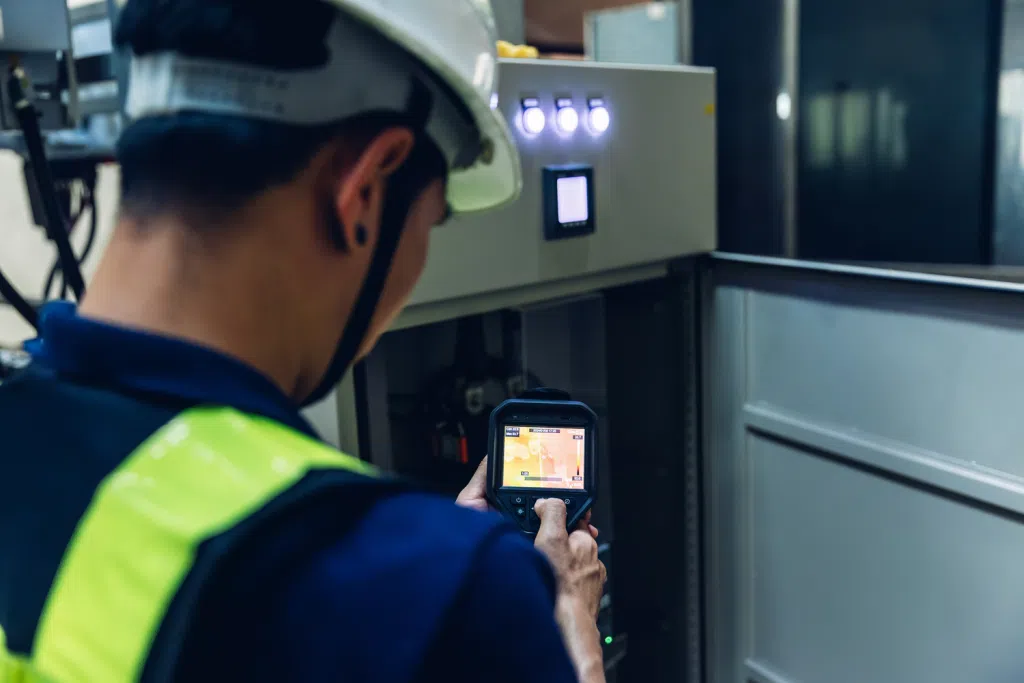
Guardian’s engineers inspect electrical panels using thermal cameras, capturing a photographic image and a thermal image for every check. Processing each one meant a back-office team manually reviewing files, marking hotspots by hand, and building each report through copy and paste into Word before converting to PDF and uploading to the customer portal. Each image took around two minutes of manual handling before the report even started.
That process could not keep pace with demand. A backlog of 14,000 images built up, and the delay was starting to affect customer payment timelines and cash flow, as well as consistency of compliance reporting.
The solution
Version 1 worked with Guardian using an agentic AI co-creation approach to design and deliver an automated inspection and reporting service, powered by Anthropic’s Claude models, built and deployed in weeks rather than months.
Operators upload thermal images along with reference data. The service uses Claude to analyse the inspection data, automatically mark hotspots, flag readings outside normal parameters, and generate a report in Guardian’s branded template. The operator reviews the output, selects which images to keep, and pushes the final report through to PDF and the customer portal.
Version 1 delivered the solution as a fully managed, cloud-hosted service under its Service-as-a-Software model, so Guardian could put it straight into live production against the real backlog rather than waiting on a lengthy build and rollout.
What this means for the wider group
The service was built as a single, self-contained agentic workflow, sitting on Version 1’s agentic co-creation platform, which is designed so new workflows can be configured and added without rebuilding from scratch. PTSG has identified further back-office processes across the group that follow the same pattern: manual, document-heavy, and well suited to the same approach.
It shows what agentic AI can deliver without a multi-year transformation programme. A single workflow, co-created and proven against live production data, started reducing cost and risk within weeks.
