Classic gets none of it. No updates. No new capability. It simply stops.
That gap between what Redwood can do and what Classic can do gets wider every quarter. So, the cost of moving early is considerably less than the cost of moving late. Moving late means you’re not just updating your interface, you’re catching up on six, nine, maybe twelve months of capability you’ve missed.
The timeline: What you’re working with
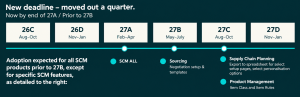
We’re currently in 26C, so you have roughly three release cycles until 27A hits in February to April 2027. If that sounds like a lot of time, trust me, it isn’t.
26C (now): This is where you are. If you haven’t started Redwood testing, you need to start now.
26D (October-December 2026): Oracle is shipping new AI agents. Requisition creation assistants. Planning exception assistants. Supplier qualification agents. If you’re still in testing mode here, you’re behind.
27A (February-April 2027): This is the deadline. All pages must be in Redwood. All your key processes must have been tested end-to-end. Your users must be trained and working in Redwood. Your customisations must be sorted. Your legacy navigation must be closed off. There’s no partial credit here.
27B onwards: Support for Classic ends. That’s it.
People often assume they can stack everything into that final quarter. Testing, training, configuration changes, adoption — all together. The problem is obvious when you say it out loud: you’ve got maximum pressure and zero time to fix things if they break.
The organisations that start now won’t be under pressure in 27A. The organisations that procrastinate or choose to wait will be.