



























































About this programme
This programme of work enabled 46 government organisations to provide more than 3,000 engineers with a safe route to adopt AI coding tools, and collected the data to demonstrate the benefit.
Client Profile
- Customer Name: Central Government Department
- Sector: Public Sector

What the department needed
Engineers across UK government required practical, safe access to AI coding assistants, backed by evidence strong enough for individual organisations to keep funding these tools from their own budgets once the programme moved on, but instead they had an abundance of licences sitting unused.
As part of the AI Opportunities Action Plan, the UK Government named AI adoption one of the fastest levers it has for civil service productivity. The challenge for this programme was to translate that commitment into practical adoption across engineering teams.
An earlier round of licence distribution had already made one thing clear: access was the easy part. Tools reached engineers, but what didn’t reach them was enablement, governance support, or any way to measure whether it was working. The department built all three in from the start this time.
Some problems that shaped the design included:
Governance was being solved repeatedly
Each organisation sets its own security requirements, approvals and AI policy. Left alone, every one of the 46 organisations would have run its own data protection impact assessment and threat model from a blank page. Solve it once, transparently, and nobody else has to.
Learning wasn't travelling
An engineer using GitHub Co-pilot in one department had no visibility of what a colleague elsewhere had already worked out. Peers doing near identical work found each other by chance, if at all.
Readiness varied enormously
Large central departments sat alongside small agencies, NHS bodies, local authorities and a police force. Different maturity, different technical debt, and different skills. One training track wasn’t applicable for all of them, so the programme didn’t build one.
The business case needed proof
Without baselines and ongoing measurement, no departmental leader had grounds to keep funding this from their own budget once the programme stepped back. Measurement was included from day one, not at the end of the process.
The result: a repeatable adoption method, stress-tested across very different organisations and security postures, that left something concrete behind for peers to take straight to their investment boards.
Readiness assessed before any licence activated
Working alongside the department, our team designed and delivered the AI Engineering Lab, the first cross-government programme to help public sector teams adopt AI coding assistants at scale. It covered GitHub Copilot, Claude Code, AWS Kiro and Gemini Code Assist, so departments could compare tools against their own work rather than accept a central recommendation.
Three factors that were critical to success:


Enablement engineers could serve themselves

Change management
Cohorts, sponsors, and 150+ engineers in one room
Delivery ran in time-boxed cohorts rather than one large rollout. Data from the first six-week phase on department selection and support levels directly shaped a redesigned eight-week second phase. Every cohort had a named engineer and a named change manager.
Sponsorship was managed as a delivery factor in its own right. Departments were asked to nominate someone able to act on the programme’s behalf, rather than the most senior name available, so engineers had real cover to protect their time. Each sponsor was onboarded, coached and given weekly check-ins.
A train-the-trainer model built a champion network, sustained through 19 community events, 960 lunch-and-learn attendances, technical drop-ins and prototype-to-production days. Engineers began running their own sessions and answering each other’s questions.
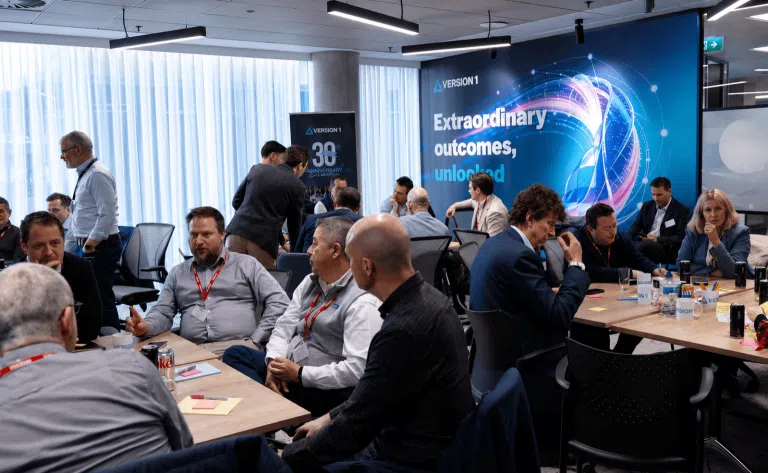
The programme also ran a one-day cross-government hackathon in London. More than 150 engineers from 34 departments formed 40 teams, supported by technology partners and judges. Teams tackled real service problems, from digitising paper services to surfacing dark data, supporting casework decisions and making organisational information accessible, and had under eight hours to build working prototypes.
46
government organisations engaged, spanning central departments, agencies, NHS bodies, local authorities and a police force
More than
3,000
users across the programme
384,000
lines of AI-assisted code produced across 44 recorded sessions
79
%
of survey respondents reported improved productivity, and 64% saved three hours or more each week, from 193 responses
8.2
out of 10
Engineers rated their AI coding assistant
Net Promoter Score of
48
on recommending AI coding assistants to a colleague, from 166 responses
55
%
of engineers said the tools made them more confident in their role
x
58
resource best practice repository, publicly available and open to contribution, with more than 133 articles published
A champion network
x
1
and self-running community that continues to operate

Why do these numbers matter?
Of everything measured, the productivity and time-saved figures do the most work. 79% of respondents reported improved productivity, and 64 engineers saved three hours or more each week.
Hours saved translate readily into a business case, which helps when the funding decision sits with the department. Both figures come from 193 responses tracked across the programme and measured against baselines captured before any licence was activated.
The 8.2 rating and NPS of 48 matter because adoption is dependant on them. Tools that engineers don’t rate, they don’t use, whatever the licence spend says. High trust scores are the leading indicator that usage will maintain once the embedded support leaves.
The move from weeks to days on security review timelines is the number every other department cares most about. Governance was the single biggest blocker to starting at all. A repeatable pattern that removes that blocker is worth more to a new department than any productivity statistic, because it’s the thing standing between them and day one.
The 58-resource, publicly available, contribution-open repository is why this isn’t a one-off. Every artefact produced, every threat model, every prompt library, every lesson learned, went into a shared, open-source repository (https://github.com/gds-dtx/aiengineeringlab) rather than a single department’s internal drive. Departments joining next don’t rebuild what’s already been proven, they pick it up and go.
The self-sufficiency result matters most of all. One department no longer needs embedded support. That’s the exit criteria for the whole model: prove it works, hand it over, move to the next department. Everything above is evidence this model does what it was built to do.
The programme has become a widely referenced model for AI coding assistant adoption across the UK public sector, and direct evidence of the ministerial mandate for productivity translating into measurable results. Its playbooks, security frameworks and training material remain publicly available, so organisations joining later inherit the work rather than repeating it.
