





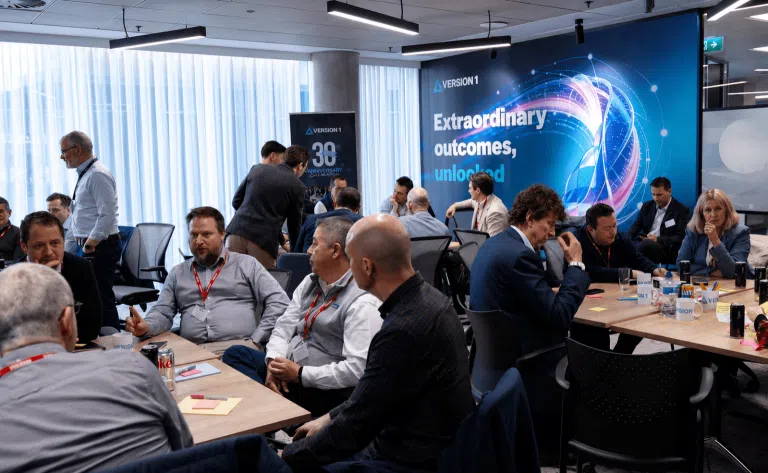











































































We surveyed 40 IT and transformation leaders from enterprise financial services organisations across the UK, ahead of our Women in Tech Leadership event in November 2026. The results show a clear gap between how much AI delegation is happening and how well it’s being managed. This article breaks down the gaps between intent and practice and highlights what leaders need to do to ensure AI delegation is governed appropriately at scale.
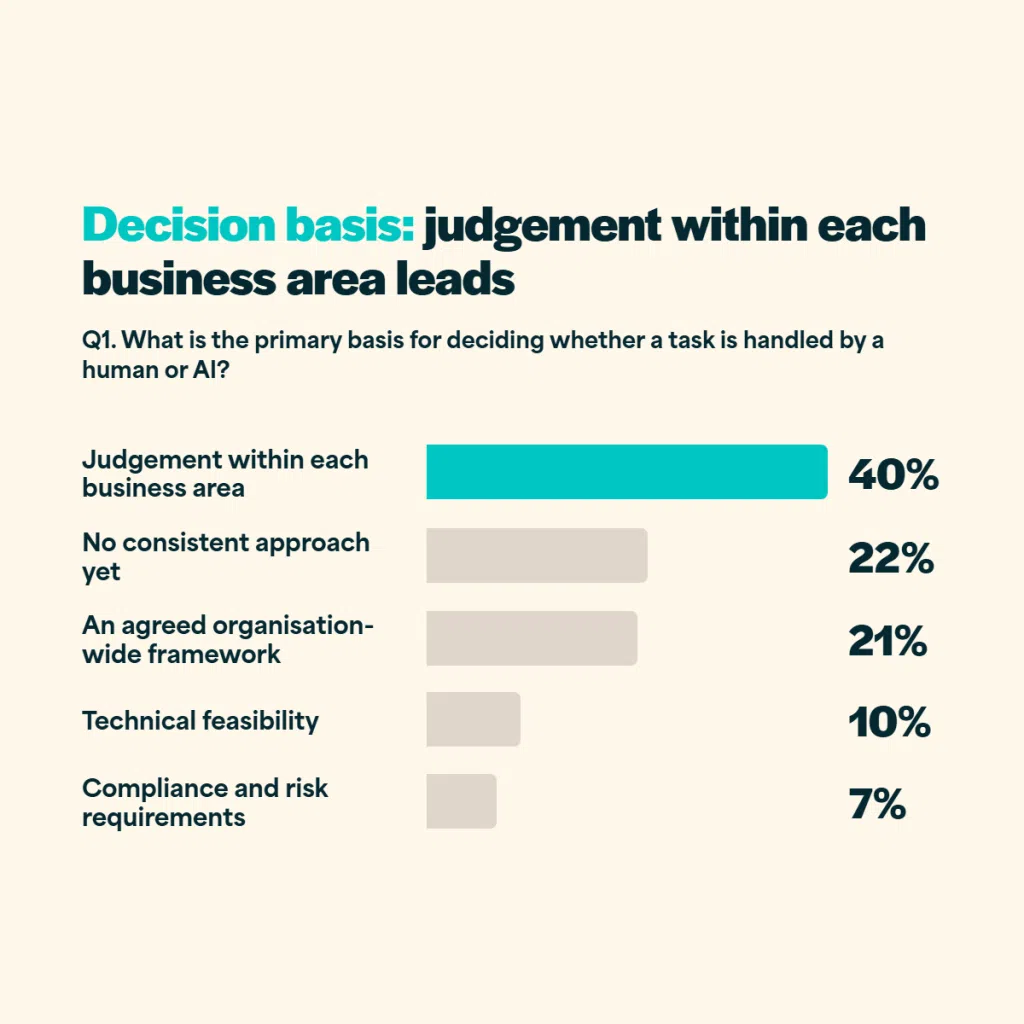
Q1: Decision basis: judgement within each business area leads
The finding: 40% make AI decisions business area by business area. Tellingly, 21% say they do have an agreed organisation-wide framework. There are organisations actively working to solve this challenge, but maturity is still low.
Why it matters: business units own the risk and have the expertise to manage it. Without common principles, central oversight and challenge, however, two teams can interpret the same kind of risk differently, with no consistent answer if a regulator or board asks why.
What to do: Establish a common AI framework with shared principles, risk classifications and controls, while keeping decision-making with the business units that own the risk and have the expertise to manage it. This isn’t a single rigid rulebook or a new risk framework built from scratch: treat AI as a new decision-maker within your existing risk frameworks, with tiers such as low, medium and high. Apply controls at the decision level, not just in a top-level policy document. Combine business ownership with central oversight and challenge so teams facing similar risks interpret and apply the framework consistently, rather than improvising their own approach.
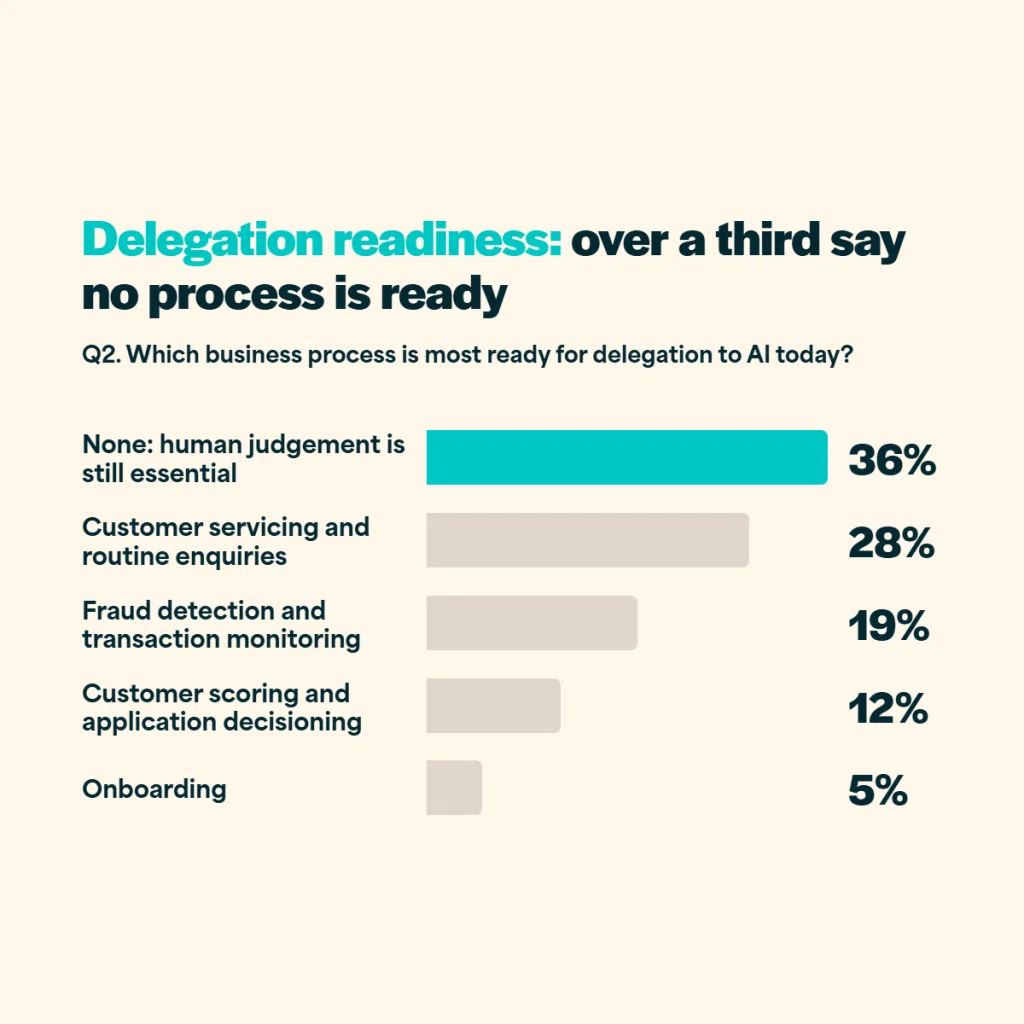
Q2: Delegation readiness: over a third say no process is ready
The finding: 36% say no process is ready for full delegation yet, with the next closest, customer servicing, behind at 28%.
Why it matters: financial services firms are not being overly cautious, this is a symptom of a maturing market. Keeping a human-in-the-loop remains a key part of every AI-enabled financial services process.
What to do: treat delegation as a dial, not a switch. Scale it gradually, use case by use case. Whatever you delegate, keep human accountability firmly in place, regardless of the technology becoming more capable.
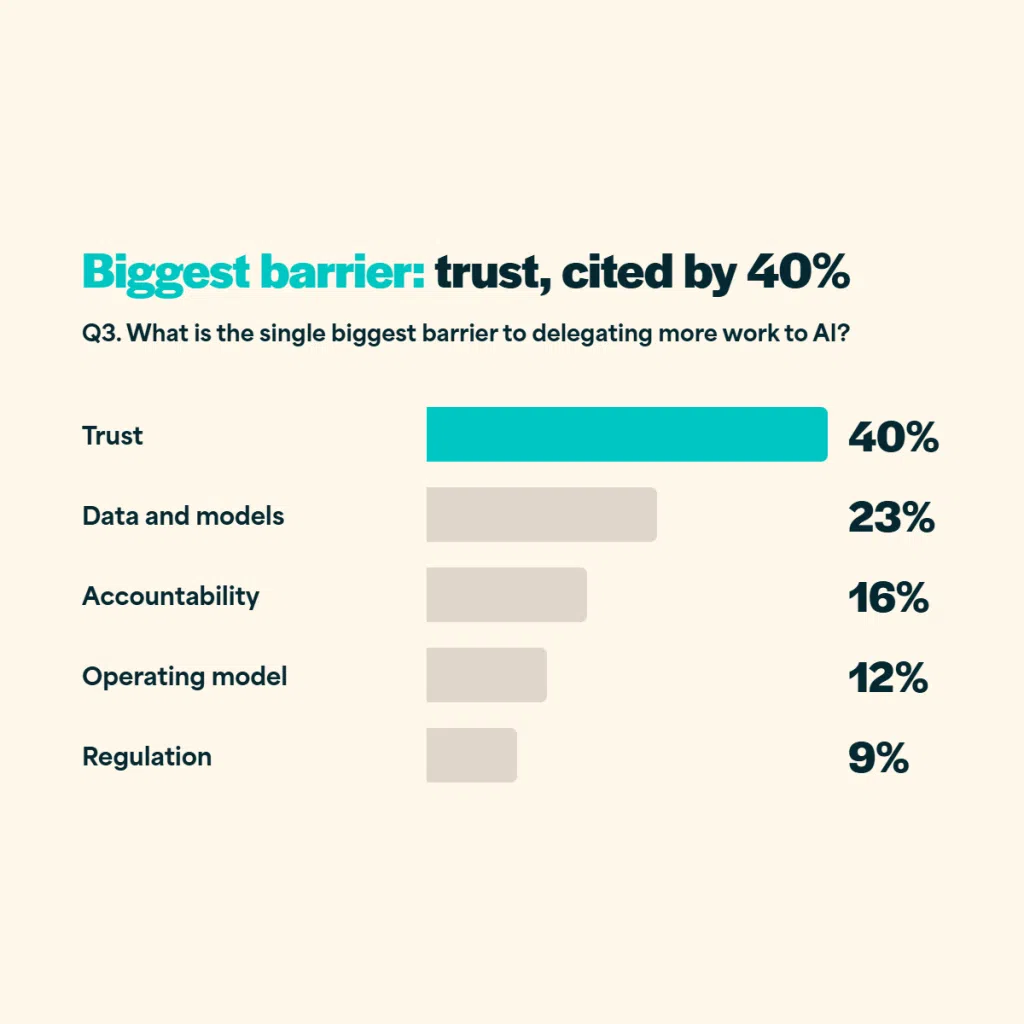
Q3: Biggest barrier: trust
The finding: trust leads at 40%, nearly double the next answer, data and models at 23%.
Why it matters: trust isn’t granted upfront, it’s built the same way you’d come to trust a person, through repeated, evidenced experience. Generative AI makes that harder, since the same question can return different answers each time you ask it.
What to do: build the evidence through doing and experimenting. Stress-test use cases upfront with legal, risk and the business in the room together, rather than relying on a committee reviewing it after the fact. Get your board hands-on with the tools directly, as the confidence will come from them seeing how the technology behaves first-hand.
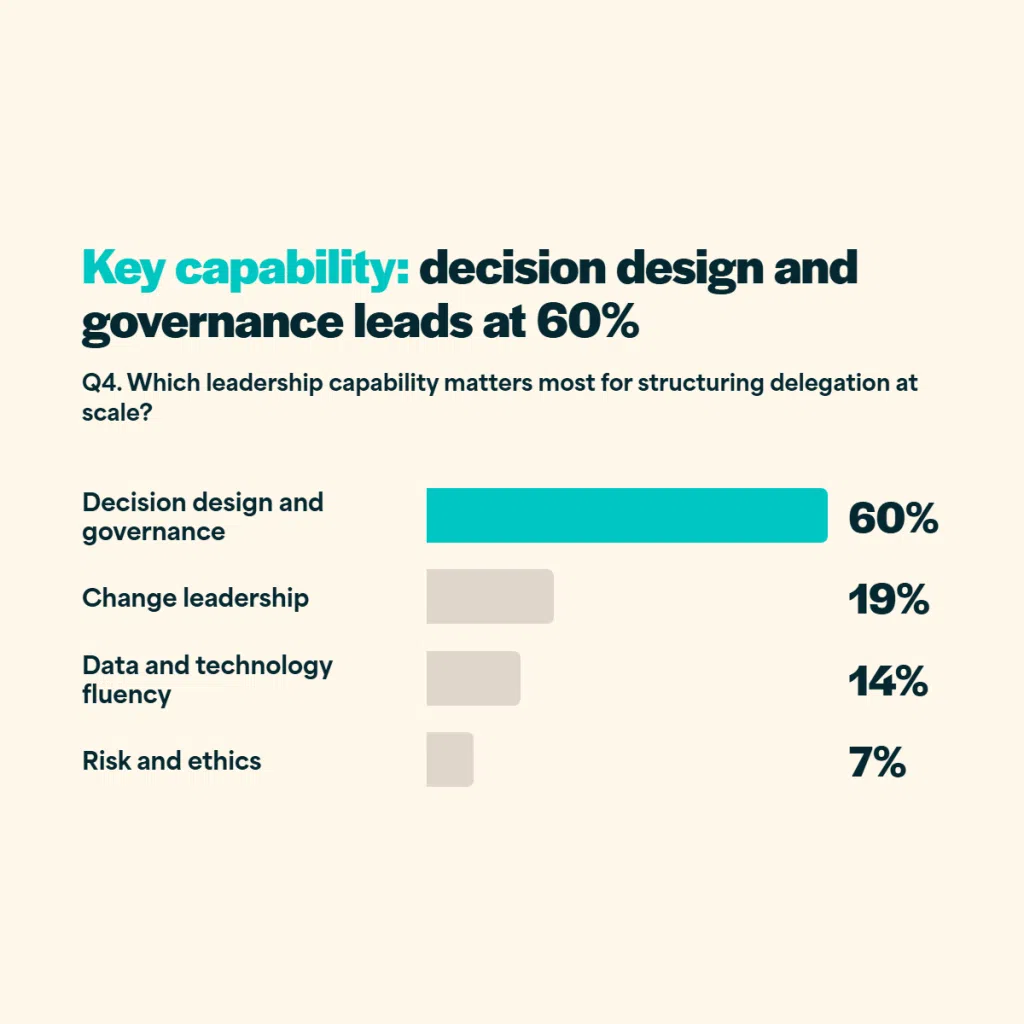
Q4: Key capability: decision design and governance leads at 60%
The finding: decision design and governance leads at 60%, more than three times the next answer, change leadership at 19%.
Why it matters: leaders already know what the answer looks like. The gap is between understanding that and actually having built it.
What to do: start small. A simple use case register is often the biggest unlock, most organisations don’t precisely know what AI is already being used for across their business. From there, bring the right people together into one centralised forum with a regular cadence, and classify use cases by risk together, rather than leaving each team to decide alone.
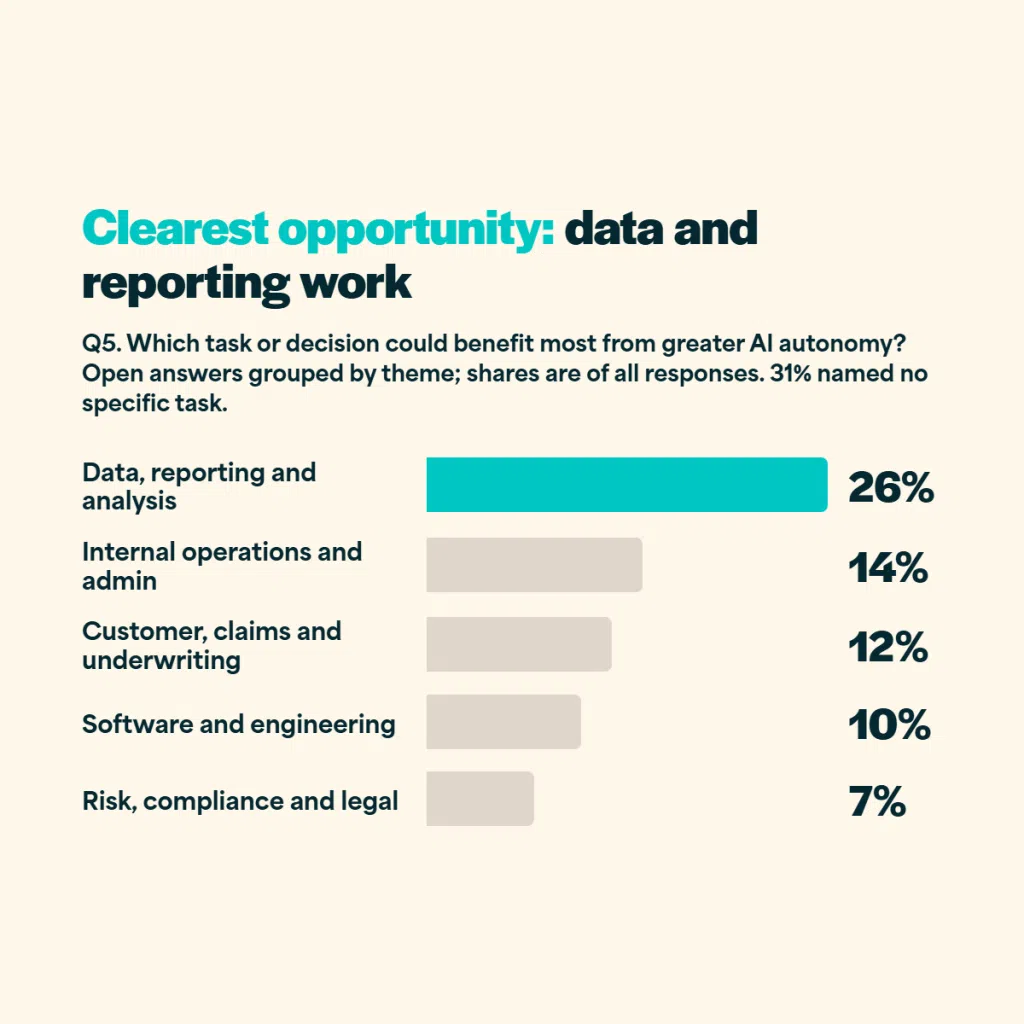
Q5: Clearest opportunity: data and reporting work
The finding: 26% point to data, reporting and analysis as the area that could benefit most from greater AI autonomy, the standout theme in the results.
Why it matters: this is where the value is apparent already, as opposed to a future projection. Repetitive, well-defined work is where autonomy delivers fastest, not the judgement-heavy decisions further down the list.
What to do: look at your own repetitive, high-volume processes first, as opposed to your hardest problems. Don’t scale any of it without the infrastructure to back it: policy built into the platform itself, with auditability and observability, and legacy systems modernised before AI runs on top of them.
What this means for leaders
Financial services has the obvious requirements and ambition for AI delegation. What’s missing is a repeatable way to turn good judgement into something consistent and provable. The firms moving fastest are building governance into the infrastructure from day one, rather than bolting it on later. If you want to talk through what AI delegation readiness looks like for your organisation, get in touch with our team.