





























































The models, capabilities and the economics have changed but most industry business cases haven’t caught up.
A large UK carrier recently told me they were targeting £15 million in AI-driven value, which sounded ambitious until I asked when that figure was set and learned it was 18 months ago. In that time, the technology has moved so far forward that £150 million is now a more realistic number to aim for, and the gap between those two figures tells you almost everything you need to know about the state of AI strategy in insurance right now.
That gap is not unusual, and it is probably the most significant blind spot I see across insurance organisations today. Leaders take a snapshot of what AI can do, build a business case around it, close the book, and move on to the next thing on the agenda. Six months later, the assumptions underpinning that case are barely recognisable because the models have changed, the capabilities have expanded, and the economics of deploying AI look completely different to what they did when the spreadsheet was last saved.
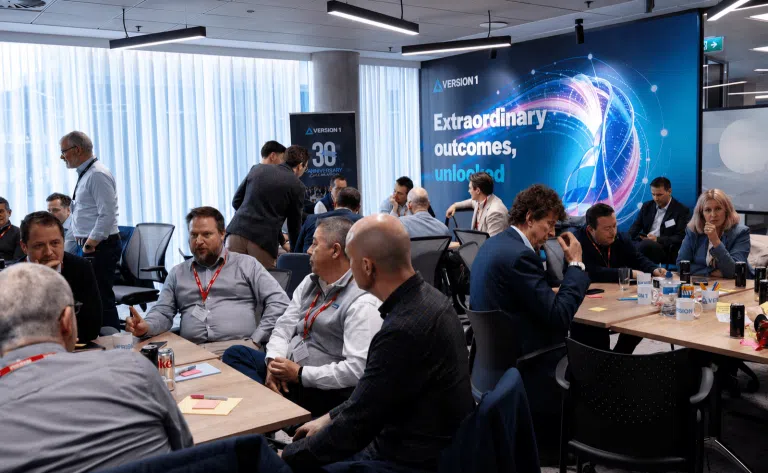
At our recent Insurance Leaders Forum, I listened in on a panel discussion with senior representatives from Microsoft and Anthropic to talk through what separates insurance organisations that are extracting real value from AI from the ones still stuck in perpetual pilot mode. What follows are the themes that resonated most strongly and the lessons I think are most worth paying attention to.
The snapshot problem
Every few weeks, a new model launches with new capabilities, and what looked like a school-level AI 18 months ago now operates, as Anthropic describes it, closer to a “data centre of geniuses.” Yet, most business cases floating around the insurance sector were written against the capabilities of the previous generation, which means they are effectively anchored to a version of the technology that no longer exists.
The view at the panel was direct: organisations need to stop treating value assessments as one-off exercises, because a use case your team dismissed six months ago may already be production-ready today. Six days is a long time in this market, six weeks feels like an era, and six months is far too long to leave a book closed on something that could be delivering value right now.
There was broad agreement at the forum that the pace of product updates has become a delivery challenge in its own right; one that requires a fundamentally different blend of skills to manage rapid change alongside ongoing process delivery. This is a different scale altogether compared to previous technology cycles, cloud included.
Reassessing AI value based on current capabilities, not a year-old snapshot, is no longer optional. That was one of the clearest messages to come out of the day.
Why your POC is not proving what you think it is
One pattern the panel repeatedly flagged was that insurance organisations get trapped in proof-of-concept cycles that were never actually designed to prove business value, and the distinction between proving a concept and proving its worth matters more than most teams realise.
The temptation is understandable: a team identifies five use cases, builds demos, and shows them to the executive committee, which feels like progress. But a POC that makes a demo look good in a boardroom is a very different thing from a production system with the right guardrails, governance, data lineage and auditability baked in from the very start. And the gap between those two things is where most AI programmes get stuck.
The point was made at the forum that for the first year of the AI wave, the governance and security tooling simply did not exist to do this properly, and even major vendor products were still maturing. Therefore teams defaulted to POCs as a way to show progress, which made sense at the time, but the problem is that a POC was never designed to prove value in the first place because it was designed, as the name says, to prove a concept.
The organisations getting real traction have flipped that approach entirely by treating early implementations not as pilots but as the first version of a production system. They build governance from day one, they measure incremental gains against specific process steps, and they resist the urge to try and prove out an end-to-end transformation in a single bound.
150 use cases, zero outcomes
One example shared was a customer who came in saying they had 150 use cases, only to emerge from a six-week rationalisation programme with 200. More use cases, not fewer, because they had been so focused on cataloguing possibilities across the entire lifecycle that they had completely lost sight of the actual business outcomes they were supposed to be driving.
This is an easy trap to fall into, and the way out of it is to stop asking “how many use cases can we identify?” and start asking “what outcome are we looking for, and what is the fastest path to measurable value from where we are right now?” The organisations that are already doing this have the numbers to show for it.
90%
Efficiency gains in claims reviews
75%
Time saved on correspondence
2 weeks – 2 days
Underwriting review turnaround
The discussion referenced a major global broker that has used AI to automate roughly 90% of its claims review workflow across approximately 190,000 processes, while also cutting around 75% of the time its teams were spending on generating and reviewing correspondence and letters. Those are not hypothetical gains from a lab environment; they are production results from a business that took a process-by-process approach to modernisation rather than trying to overhaul its entire operation at once.
The forum also referenced a top-ten global insurer whose underwriting review process used to take two weeks from end to end and has now been brought down to two days, with the expectation that it will reach hours in the near future.
What made that possible, in both cases, was a willingness to focus on a specific, well-defined process step, instrument it properly, and measure the outcome before moving on to the next one.
The organisations delivering those kinds of results are not trying to boil the ocean and transform everything at once. Instead, they are picking specific process steps within claims, or within quotation and submission, and modernising those individually so they can measure the incremental gain, prove the value, and then move on to the next opportunity with confidence and momentum behind them.
The governance question has changed
For regulated industries like insurance, governance is not optional, but the conversation around it has shifted considerably as the tooling matures. The most forward-looking organisations are now building technology-agnostic AI centres of excellence rather than assembling product-led teams tied to a single vendor’s roadmap.
The point was made at the forum that this space has so many contributing players right now that centres of excellence genuinely should be agnostic, defining value at the process and business-operation level rather than functioning as product management for a single platform. I think that is right, and it is a view I hear increasingly from CIOs and CDOs across the sector.
The staffing model varies depending on the size and complexity of the organisation. Banks tend to run 30 to 50 people in these functions, while insurance organisations are typically leaner at around ten, but the principle is the same regardless of headcount: a central hub that governs what you are trying to deliver, with the ability to extend capacity elastically through delivery partners when a specific initiative demands it.
70% change management, 30% models
If there was one ratio that cut through the noise at the forum, it was this one: 70% change management, 30% models.
The technology works, and that is no longer an obstacle. The real constraint is getting people to adopt it, trust it, and weave it into their daily operations in a way that sticks. The advice at the forum was to start with a group of 30 to 50 people and build critical mass within that cohort. The thinking there is once that group is operating with AI embedded in their workflow and seeing the results, others across the business start knocking on the door asking for the same thing, and the demand shifts from being a top-down mandate to an internal pull.
But the change management piece has a specific and somewhat underappreciated dimension in regulated industries: you will have to prove that the technology gives the right answers, in the right way, every single time it runs. That QA process needs to be repeatable across the entire delivery spectrum, and if you do not think about it at the beginning of your programme, you will discover that you need a completely different set of skills by the end, at which point the rework becomes painful and expensive.
The trifecta model
A delivery model that came up repeatedly at the forum: a trifecta of an AI model provider, a delivery and implementation partner, and a hyperscaler, where each brings a distinct capability that the others cannot easily replicate:
- The AI provider brings model expertise and rapid iteration on what the technology can do
- The delivery partner brings implementation muscle along with change management and deep industry knowledge
- The hyperscaler brings infrastructure and enterprise integration at scale
The practical implication for insurance organisations is that they don’t need to build all of these capabilities internally and, in my experience, most should not try to. The trifecta model lets you bring in the right expertise at the right time, build something agentic rather than merely automated, and retain a central governing function in-house where it belongs.
The alternative, as one panellist put it, is investing millions into a sprawling transformation programme and ending up with nothing to show for it. The smarter approach is to keep it simple: do not try to boil the ocean, boil one pot properly, and then move on to the next one with the lessons and momentum you have built along the way.
The panel view was clear: find two to three use cases, make sure they are the hardest hitting, bring in the trifecta, and build something agentic rather than merely automated.
What to do now
If you set your AI value target more than six months ago, it is worth going back and revisiting it against what the technology can actually deliver today, because there’s a good chance that it has outpaced your assumptions by a significant margin. If you are sitting on a backlog of dismissed use cases, reopen them against current model capabilities, since something that was not feasible in the autumn may well be production-ready now.
And if you are in the process of building your AI centre of excellence, make it technology-agnostic and outcome-focused from the outset. The models will keep changing, the vendors will keep evolving their platforms, and the organisations that seize opportunity will be the ones with a clear view of the business outcomes they are chasing and the flexibility to use whatever combination of tools and partners gets them there fastest. I would rather see an insurer move quickly on three well-chosen use cases than spend another six months cataloguing 200.
Want to talk through where AI could move the needle for your business?
I am always happy to have a conversation about what we are seeing across the insurance sector and where the real opportunities are right now.