




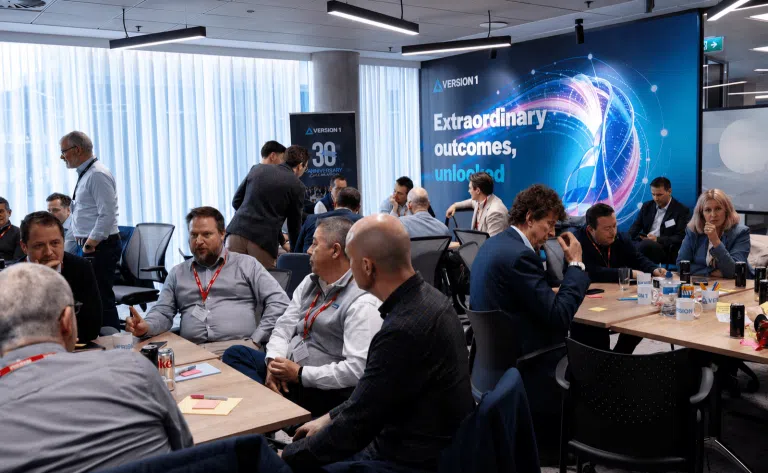


















































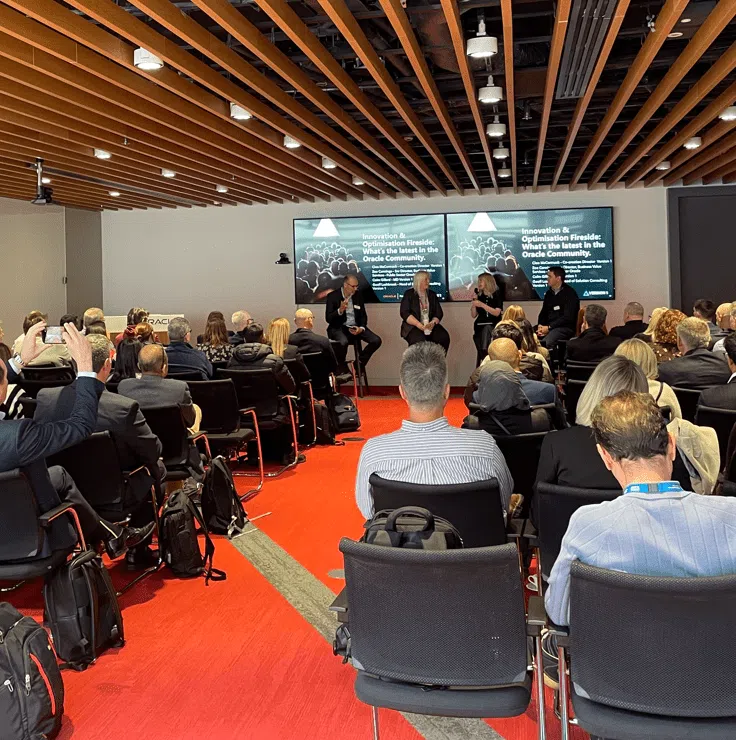
Compering our recent Oracle SaaS Insights Day in London reminded me of Dr Friederike Fabritius’ research on peak performance and flow. Her work argues that sustained performance happens when three elements are held in balance: fun, fear, and focus.
I kept coming back to that framework as I listened to customers, speakers, and practitioners share what it actually takes to make Oracle SaaS AI work. Because what I heard confirmed my lived experience. AI programmes are not technical initiatives that happen to involve people. They are human change programmes that happen to use technology.
Fun: start with what could be different
The customer stories that landed with most impact were from organisations that had started in an unusual place. Before they touched a system, before they evaluated a feature, they asked a deceptively simple question: what do we actually want to be different?
That question changed everything. It shifted the conversation from “what does Oracle AI do?” to “what problem are we solving, and what would it look and feel like if we solved it well?” A more precise version of that question, one I heard in the room, is this: imagine if that was no longer a problem. What would be different? It sounds simple. In practice, it is surprisingly hard to answer with the specificity that a good implementation requires. Brent Council, Softcat, and the Crown Prosecution Service all spoke about bringing the right people into that conversation early. Cross-functional teams. Finance, HR, procurement, operations, and IT in the same room, mapping how work actually happens rather than how it is supposed to happen, and then being brave enough to redesign it.
What struck me was the energy in those early stages:
When people are invited to shape what better looks like, rather than being told a system is coming, something shifts. Curiosity replaces anxiety. Teams start to see themselves inside the change rather than outside it. That is not a soft outcome. It is the foundation on which everything else depends.
Fear: the human reality of AI change
Alongside the excitement, there is fear. The event did not shy away from that, and neither should we.
Most teams have been asked to do more with less since the pandemic. AI arrives into that context carrying significant expectations: productivity gains, service improvements, faster outcomes. At the same time, it raises honest questions about roles, relevance, and what the future of someone’s working day actually looks like. One of the customers put it plainly. People do not resist change. They resist change they cannot see themselves in. Their answer was a mission and a vision clear enough that individuals could locate themselves inside it.
Part of what makes that vision believable is being honest about what is actually changing. Roles are not disappearing, they are evolving. The nature of work is shifting, and the organisations that communicated this clearly, and early, had a different quality of engagement from their people. What helps most is not a communication plan, it is genuine involvement. In our co-creation team, we use a crowdsourcing tool that invites people across the organisation to identify the problems they want a system to solve. That changes the dynamic entirely. People move from being recipients of a decision to being architects of a solution. They bring their lived knowledge of where the friction actually is, which is often not where leadership assumes it to be, and in doing so they develop a stake in making the answer work. The process of finding the problems worth solving becomes part of the change itself.
There is another fear worth naming, one I see often. Organisations often hope that AI will resolve problems that are actually rooted in processes that have never been properly documented or designed. When AI is introduced on top of that, anxiety increases. People are being asked to trust technology layered onto something that already does not work for them.
The honest truth is that no system can fix a broken process. The process needs to be understood, and often redesigned, before AI can genuinely augment it.
The customers who had done that work spoke with a confidence that was striking. They were not selling the technology. They were describing a different way of working, and the technology was simply how they got there.
What made the difference, in several cases, was the willingness to ask hard questions before committing to answers. One customer described their relationship with Version 1 not as a supplier relationship but as a critical friendship. That framing stayed with me. A critical friend does not tell you what you want to hear. They ask the questions you have been avoiding, they sit with you in the discomfort of honest diagnosis, and they are still there when the answers are inconvenient. That kind of relationship requires bravery on both sides. But it is precisely that bravery, the readiness to look clearly at what is not working before reaching for a solution, that separates the implementations that land from the ones that stall.
Focus: implementation in the right order
Fear, handled honestly, creates focus. And that is where the practical shape of a good Oracle SaaS AI programme becomes clear.
Most organisations are at the beginning of this journey. There is ambition and there is pressure to show results. Oracle has built powerful capability into its platforms. Oracle Fusion Cloud Applications carry embedded AI across every functional domain, and Oracle AI Agents are increasingly capable of handling complex, multi-step processes. But technology capability is not the constraint. The order of operations is.
The organisations that were furthest along had followed a consistent sequence:
- Define what you want to be different
- Map how work actually happens today
- Redesign the processes that need redesigning
Then implement Oracle SaaS AI on top of something that is already working better. After that, invest in the people side of it: training, change champions, and leaders who model the new ways of working rather than simply announcing them.
That last point matters more than most implementation plans acknowledge. The customers who spoke about having dedicated change leads and structured capability building described adoption curves that looked different. People were not just aware of the technology. They were using it, improving with it, and starting to shape how it developed.
Bringing it together
The key takeaway from the day was not that organisations should slow down,it was that the organisations making the most progress had done the thinking before they started the doing. Go slow to propel forward.
They had asked what they wanted to be different before they picked a system. They had brought their teams together to reimagine how work could flow. They had been honest about fear rather than papering over it with a launch event. And they had invested in the human infrastructure, training, change leadership, and visible senior commitment, that turns a technology implementation into a genuine shift in how an organisation operates.
- Begin at the end
- Fix the process
- Bring people with you
Then let Oracle SaaS AI do what it does best. That is how organisations reach a state of flow rather than a state of friction.
Explore more AI resources:
Continue your AI journey
To learn more about putting these principles into practice, visit our AI strategy and implementation page
Unlock the value of Oracle AI
Or join our upcoming webinar: Unlocking value with Oracle ERP AI Agents